


Entrepreneur, Senior Leader & Ecosystem Builder with a degrees in Music, Psychology, Digital Mgmt & Transformation. Co-founder of the Music Factory and Earkick. Life-long learner with a deep passion for people, mental health and outdoor sports.

Social media is everywhere. You’re surrounded by an endless scroll of polished images, carefully curated videos, and inspiring stories that create an aura of perfection. From seemingly flawless vacation photos to enviable career milestones, your digital world is dominated by highlights that make every person you follow appear to be living their best life.
But behind this alluring facade, you know that the perfect illusion, the glow up you see online often cloaks a reality rife with perfectionist pressure, anxiety, stress, and self-doubt. Social media creates unrealistic expectations which impact your mental health negatively.
Feeling the weight of perfectionism? AI in mental health is transforming support, making help more accessible than ever. Chat with Earkick now to break free from the pressure and find your authentic self, stress-free.
#1 The Rise of Curated Identities
You’ve likely felt the pressure to create a “highlight reel” of your own life. Whether it’s through Instagram stories, TikTok videos, or LinkedIn updates, these platforms encourage you to present your best self—a version that’s curated, filtered, and designed to inspire admiration.
This emphasis on being a perfectionist, however, can be psychologically taxing. Social media-related anxiety is a real thing because social media plays into the perfectionist tendencies that many people already struggle with. It amplifying the pressure to conform to an unrealistic ideal of success and happiness.
#2 The Illusion Of Social Media Perfection
Imagine scrolling through your Instagram feed to find a friend’s post of a pristine, sunlit kitchen with a caption about their perfect morning routine. You look around your own, less-than-spotless kitchen and can’t help but feel a twinge of inadequacy. Yet, what you don’t see are the discarded takeout boxes just outside the frame, or the stress your friend felt needing to capture this ‘perfect’ moment.
Social media often presents a highly curated version of reality, where the messy and mundane aspects of life are filtered out. The quest for perfection on platforms like Instagram and Facebook can lead to increased rates of anxiety and depression, particularly if you are more prone to compare your life to the highlights you see online. Let’s remind ourselves that behind every perfect post, there are unseen struggles and imperfections.
#3 Perfectionism and Its Relationship With Anxiety
Visualize yourself spending hours editing a photo for your feed, obsessing over every detail to ensure it meets your high standards. Despite receiving numerous likes and comments, you fixate on the one aspect you could’ve improved, leading to a night of anxious rumination.
Why is striving for perfection bad?
Perfectionism isn’t just about striving for excellence; it’s an all-or-nothing mindset that sees any outcome less than perfect as a failure. This mindset can exacerbate anxiety and contribute to a cycle of self-criticism and fear of judgment. The desire to present a flawless image on social media only feeds into this toxic cycle, making it harder for us to appreciate our own achievements and learn from our mistakes.
Should instagram and other social media sites display exactly how many “likes” a post receives? That’s a controversial question. It’s important to understand that showing likes should only affect conscious individuals who wouldn’t let the number of likes impact their self-confidence. However, this may deeply hurt teenagers and those whose self-awareness is not yet stable.
#4 The Role of External Validation In Perfectionism
Imagine you post a selfie and constantly refresh the page to see the number of likes. When the likes aren’t as numerous or immediate as expected, your mood plummets and you may start questioning your self-worth.
Why do you feel the need to be perfect?
Social media platforms are designed to be addictive, encouraging users to seek external validation through likes, comments, and followers. This need for approval can lead to increased anxiety, as self-worth becomes contingent on the reactions of others. It’s important to cultivate self-compassion and find validation from within, rather than relying on external sources.
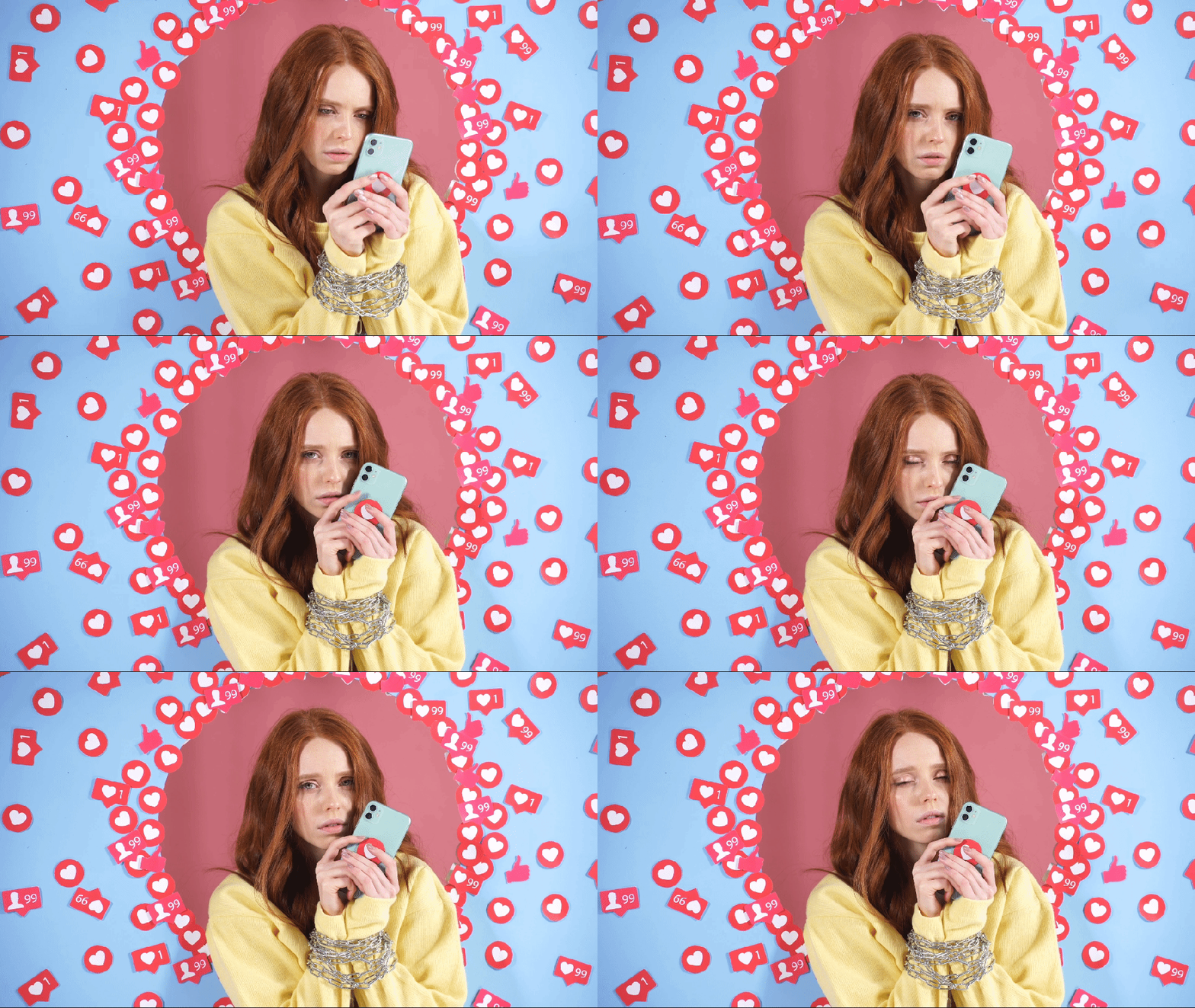
#5 The Impact Of Social Media Pressure
Put yourself in the shoes of an aspiring artist. You follow numerous successful artists on social media. With each post showcasing another artist’s success, you feel increasingly like you’ll never measure up, which stifles your creativity and fuels anxiety.
Comparison can be a thief of joy, particularly on social media where everyone’s highlight reels are on display. Constant comparison to others can lead to feelings of inadequacy and can intensify dating anxiety, rumination and depression.
Struggling with comparison and anxiety? Connect with our AI therapist to build confidence.
#6 Cyberbullying and Negative Feedback
Picture yourself posting a new profile picture. After a few minutes, you receive a hurtful comment. You try to shrug it off, but the comment lingers in your mind, casting a shadow over your self-esteem and increasing your anxiety about future posts.
Cyberbullying and negative feedback are unfortunate realities of social media. These experiences can deeply affect mental health, leading to anxiety and a fear of expressing oneself authentically. Building resilience against negativity, surrounding yourself with a supportive community, and reporting or blocking bullies are ways to protect your mental well-being online.
#7 Fear Of Missing Out (FOMO) and Anxiety
Imagine seeing posts from a party you weren’t invited to and feeling a mix of sadness, exclusion, and anxiety. You start questioning your social standing and worry you’re missing out on key experiences.
Social media can exacerbate the Fear Of Missing Out (FOMO), a pervasive worry that others are having more fun or living better lives. This fear can lead to anxiety and persistent feelings of inadequacy. It’s helpful to step back and appreciate your own life, acknowledging that social media is not a full representation of reality.
#8 The Psychological Toll of Perfectionism
It’s natural to compare yourself to others. Perhaps you find yourself envying your friend’s perfect relationship, a coworker’s exciting job opportunity, or a travel blogger’s latest adventure. Over time, this habit of comparison can wreak havoc on your mental health.
- Anxiety: The need to measure up to your online persona can trigger intense anxiety. You may find yourself feeling constantly on edge, fretting about how your latest post will be perceived and fearing that you’re not doing enough to “keep up.”
- Low Self-Esteem: Seeing others’ perfect lives makes it easy to view yourself as falling short. The curated nature of social media can distort your perception of reality, leading to self-criticism and diminishing your self-worth.
- Depression: The combination of anxiety and low self-esteem can increase your risk of depression. Using social media can directly affect anxiety, depression, and thoughts of suicide. More and more evidence shows that social media may spread mental health issues like a contagious disease.
- Burnout: Keeping up appearances requires effort. From editing photos to crafting the perfect captions, the cycle of maintaining a flawless digital persona can exhaust your mental resources, leading to burnout.
Examples of Striving For Perfection
Hearing about these effects is one thing, but experiencing them firsthand brings a different kind of clarity. Many people who once found joy in sharing their lives online are now grappling with social media burnout and anxiety.
- Jessica, a 27-year-old travel influencer, used to love documenting her adventures on Instagram. “In the beginning, I was just sharing my passion for travel,” she explains. “But as my followers grew, so did the pressure. I had to think about my ‘brand,’ curate my feed, and make every destination look magical. Eventually, I found myself feeling more anxious about getting the perfect shot than enjoying the trip itself.”
Her anxiety worsened as she scrolled through other influencers’ feeds. “It felt like everyone else was doing better, visiting more exotic places, and getting more engagement. I constantly questioned my abilities and started to lose my love for travel.” - Mark, a 31-year-old software engineer, used LinkedIn to document his professional accomplishments and network with industry peers. “LinkedIn is all about showcasing your best side, which makes sense. But I couldn’t help but compare my own career progress to others,” he says. “I’d see people with new certifications, exciting job titles, and promotions, and I felt like I had to keep up.”
Mark tried to improve his digital presence by posting more frequently about his achievements. “It was exhausting. I felt like I had to prove myself constantly, which took a toll on my confidence. I even started dreading my workdays, knowing I had to maintain this facade.”
Seeking Solutions: Finding Balance in a Perfection-Obsessed World
Breaking free from the anxiety cycle requires a conscious shift in social media habits. Here are some practical strategies:
- Limit Screen Time: Set daily or weekly screen time limits to reduce exposure to anxiety-inducing content. Track your mood and let your progress motivate you to continue.
- Unfollow and Curate: Unfollow accounts that contribute to negative self-comparisons and curate your feed to include positive, diverse perspectives.
- Practice Self-Compassion: Recognize that what you see online isn’t representative of everyday life. Treat yourself with kindness and let go of the need for perfection. Get the Earkick Panda to support you and cheer you up anytime you need it.
- Engage Mindfully: Approach social media interactions with mindfulness, sharing posts that align with your values and engaging authentically with others.
- Seek Support: Reach out to mental health professionals if your anxiety becomes overwhelming. If you’re not sure where to start, try talking to a personal free AI chat for mental health. If you’re trying things like meditation or singing bowls to feel better, be aware of possible sound healing side effects.
- Take Regular Digital Detoxes: Schedule regular breaks from social media to reconnect with the offline world. This can help reduce dependency on external validation and alleviate anxiety.
- Set Boundaries for Social Media Use: Establish specific times for social media use and stick to them. Avoid using social media first thing in the morning or before bed to maintain a healthier mental space.
- Focus on Real-Life Interactions: Prioritize face-to-face interactions with friends and family. Building strong, in-person relationships can provide a more substantial sense of connection and support than online interactions.
Implementing these strategies can significantly reduce the negative impact of social media on mental health. However, understanding the broader context and underlying issues is also crucial.
#9 The Paradox of Perfectionism and Productivity
Ironically, the perfectionist’s drive can be both a blessing and a curse. On one hand, aiming for high standards can lead to remarkable achievements. On the other hand, when channeled through the lens of social media, this drive can become destructive, leading to procrastination and a paralyzing fear of making mistakes. Anxiety thrives in this space where one’s self-worth is measured against the seemingly flawless execution of tasks by others online. To maintain good mental health, it’s important to distinguish between healthy striving and maladaptive perfectionism that hinders productivity and peace of mind.
#10 Building a Healthier Relationship with Social Media
Cultivating a healthier relationship with social media means learning to use it in a way that doesn’t exacerbate our perfectionist tendencies or anxiety. It’s about setting realistic expectations for yourself and your online interactions. To do so, learn to celebrate your imperfections and embrace vulnerability. Sharing authentic experiences and struggles can not only alleviate your own anxiety but also help dismantle the myth of perfection that pervades social media.
#11 The Importance of Digital Literacy in Mental Health
Digital literacy plays a pivotal role in mitigating the impact of social media on mental health. By understanding how social media algorithms work to keep us engaged and how content is curated for mass consumption, you can start to see through the facade of online perfection. This insight enables us to approach social media with a critical eye, thereby reducing the perfectionist pressures that lead to anxiety. Also, digital literacy empowers you to curate your feeds in ways that promote positivity and mental well-being.
#12 The Balance Between Online and Offline Lives
Striking a balance between your online presence and your offline life is crucial for managing perfectionism and anxiety. Dedicating time to offline hobbies, face-to-face interactions, and self-reflection helps you maintain perspective and reduce the hold that social media has on your self-esteem. Remember that you are more than your social media profiles and that your value extend far beyond what can be captured in a post or a tweet.
#13 Beyond the Filtered Facade
While social media can offer opportunities to share and connect, don’t forget that what you see is often filtered through a lens of perfectionism. The anxiety of trying to maintain an idealized version of yourself can have serious consequences on your mental health. So, approach social media with intention and self-awareness to reclaim your peace of mind.
Ultimately, remember that likes, comments, or curated images don’t determine your worth. Your value is rooted in your authentic self, and you don’t need to chase perfection to find fulfillment. The perfect illusion doesn’t hold up against genuine, unfiltered happiness.
Now stop scrolling and go meet some real-life friends!
