

Entrepreneur, Senior Leader & Ecosystem Builder with a degrees in Music, Psychology, Digital Mgmt & Transformation. Co-founder of the Music Factory and Earkick. Life-long learner with a deep passion for people, mental health and outdoor sports.

Nobody starts out a relationship by searching for “dating someone with BPD.” Neither do you. You start it because the connection feels unreal, magnetic, and deep. Like someone finally sees every hidden corner of you and loves it on sight.
Then things start changing.
One week, you are the best thing that ever happened to them. The next, you get labeled cold, distant, selfish, or suddenly “just like everyone else.” Arguments explode out of nowhere. Sure, apologies come fast, and promises even faster. Yet somehow, you keep finding yourself back in the same emotional maze, wondering how love can feel this intense and this exhausting at the same time.
At some point, usually late at night, you catch yourself typing into your Earkick app:
Am I dating someone with BPD?
Rabbit Holes And Horror Stories
The more you scroll through Reddit, the more you feel like others are echoing your own questions. Why does everything feel so extreme? How is it possible that small things turn into disasters? Why do I feel both deeply loved and constantly unsure? Am I the only one questioning my own reality?

And then you fall into a rabbit hole of forums, BPD horror stories, hot takes, and half-truths. Some say “run!” Others suggest being more patient. Some even blame you or the diagnosis. But most leave you more confused than before.
This article wants to cut through that noise. Because dating someone with BPD isn’t a movie or a meme. It isn’t even a personality type. You’re looking at a real relationship with real emotions, real risks, real tenderness, and real sneaky traps.
And the biggest danger isn’t even the diagnosis. It’s the myths people believe about dating someone with BPD.
Let’s talk about the ones that can wreck love.
What Is Borderline Personality Disorder (BPD)?
By now, you’ve probably been hit with a stream of clinical definitions, dry symptom lists, and confusing jargon. Let’s make it simple and actually useful.
Borderline Personality Disorder (BPD) is a pattern of thinking and feeling that makes emotions intense, relationships feel high-stakes, and reactions sometimes disproportionate to the moment. People with BPD don’t choose to feel like this. Their nervous systems are wired for emotion that’s on full volume and connection that feels like life or death.
Here’s what that can look like:
- Emotions that feel too big to contain. For example, a happy moment can feel euphoric, while a small disappointment can feel catastrophic to them.
- A powerful fear of abandonment. Rather than “I get sad,” they would say, “If you leave me, I might disappear emotionally.”
- Shifting views of people they care about. One day, you’re called the safest person on earth. The next you’re “cold,” “unreliable,” or “not there for them.”
- Impulsivity that shows up in intense ways. This can manifest as sudden spending, risky decisions, or dramatic shifts in priorities. It’s not calculated, but rather just raw emotional energy.
Dating Someone With BPD… Or Just Triggered?
Strong emotions, past relationship wounds, and high-stress life phases can make any relationship feel chaotic. Not every intense bond points to BPD, and not every conflict means something is wrong with your partner. The key difference lies in patterns that repeat across time, situations, and relationships, rather than in single arguments or bad weeks.
BPD affects about 1.6% to 5.9% of adults in the general population. This means it’s common enough that a lot of people, including you, end up in relationships with someone who either has BPD or traits that look a lot like it.
The Whiplash Cycle
The patterns described above tend to feel oddly specific once you’ve lived them. Called the whiplash cycle, it represents the repeated swing between intense closeness and sudden threat, where love feels like a lifeline one moment and like a trapdoor the next. Here’s what that swing usually looks like up close.
#1 The Soulmate Phase That Feels Like Oxygen
The hook often hides in how fast ordinary life becomes “us.” Pet names appear in week one. Future plans get spoken like facts. A private language forms, and suddenly it feels weird to do everyday things without reporting back. The soulmate bond doesn’t just feel close. It starts to feel like a home base your day has to orbit.
#2 Splitting: From Hero to Enemy Overnight
The hard part may not seem dramatic at first. It can start with a look that lands wrong, a joke that misses, a delayed reply that gets translated into “I don’t matter.” The emotional meaning expands so quickly that the original event disappears. What remains is the verdict that you’re unsafe, cruel, and even abandoning. Trying to explain tends to sound like you’re defending yourself, and the conversation quickly shifts from the present moment into a full character trial.
#3 Walking on Eggshells and Shrinking Yourself to Keep Peace
After a few rounds, you begin managing the room like it’s filled with invisible tripwires. Tone becomes a strategy, words get filtered, and plans get adjusted to prevent any kind of blow-up. The weirdest part is how the rules keep moving. Something that worked last month triggers a storm this week, so the safest option becomes staying small. You go for fewer opinions, fewer needs, fewer “hard” conversations, and fewer people around you who might “influence you.”
#4 The “Discard” Story
This tends to hit after a rupture such as a boundary, a pushback, a request for space, or a “we need to talk.” The shift can feel surgical, while warmth turns into distance and access disappears. Maybe messages get ignored or turned icy. Sometimes you get replaced publicly, sometimes privately, and sometimes just erased. The part that messes with your head is the rewrite. You witness how the relationship gets edited into a version where you were the problem all along, and the good moments get treated like proof you manipulated them.
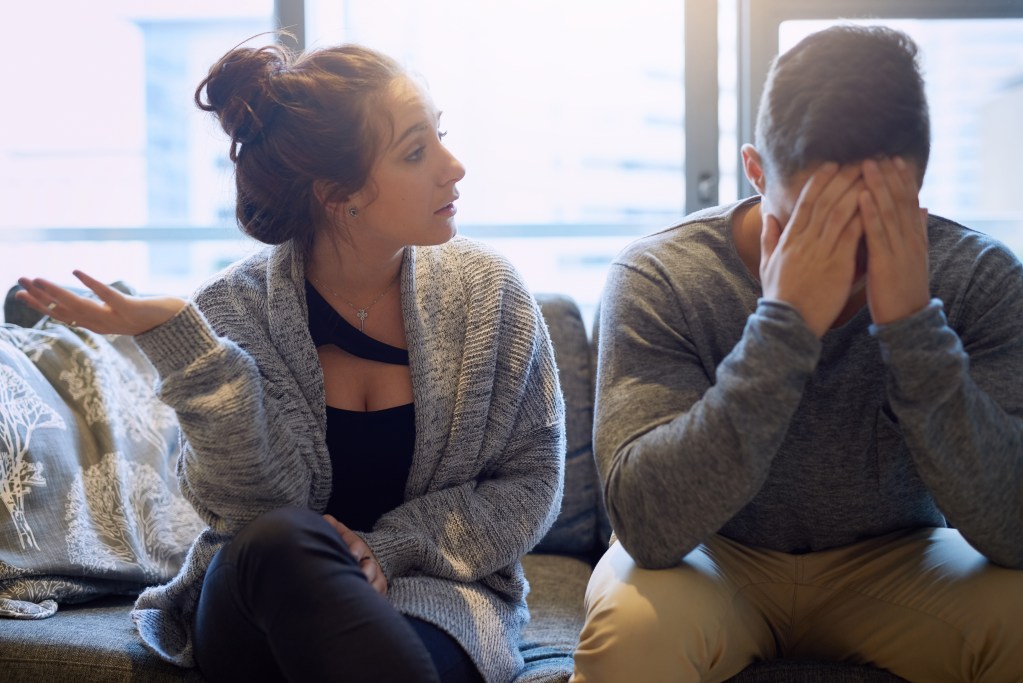
9 Myths About Dating Someone With BPD
Once you start searching “dating someone with BPD,” the internet hands you extremes. Hot takes and comment sections that read like war diaries. Over time, those myths start driving your choices like a hidden steering wheel. Let’s debunk them.
Myth 1: People With BPD Can’t Love
This myth spreads fast because the emotional swings feel so brutal. Love flips into rage, and your brain goes,
“So that love was fake.”
A lot of the time, love exists in high-definition. Big warmth, deep longing, and strong attachment. The hard part comes from emotional storms that drown out steadiness.
Watch instead: Do they show care in actions, repair after conflict, and respect your boundaries even when upset?
Myth 2: BPD Equals Manipulation
When fights twist reality, “manipulation” feels like the only explanation. Often, the driver is silent panic rooted in fear of loss, shame, and emotional flooding. Harm can happen even without bad intent. What they meant and what it did to you stay separate things.
Watch instead: After they calm down, do they own what they did, apologize without excuses, and try changing the behavior next time?
Myth 3: “If I Love Harder, They’ll Stabilize”
This myth turns you into a human stabilizer bar. Softer voice, better timing, fewer needs, more patience, and a long list of other options. Eventually, love becomes labor. And your mental health pays the bill sooner or later.
Check instead: Do they use skills when activated? Are coping mechanisms such as pausing, breathing, or time-outs familiar to them? Do they attend treatment and take responsibility for regulation?
Myth 4: Treatment Never Works
Forums love catastrophizing and sharing doom stories. They go viral because they’re dramatic. Reality, on the other hand, looks more nuanced. Treatment approaches like Dialectical Behavioral Therapy (DBT) help many people reduce reactivity and build relationship skills. As with other conditions, progress tends to come in waves rather than in a straight line.
Check instead: Do you see steady effort over months? Is there a track record of therapy attendance, homework, skills practice, fewer blowups, and faster repair?
Myth 5: It’s Always the Partner’s Fault
Some spaces turn you into the villain by default. Blame becomes a shortcut when people crave a simple story and shy away from looking closer. Real relationships run on shared responsibility, and harmful dynamics have more than one ingredient.
Check instead: In a conflict, do both people get to have needs? Do conversations include “what I did” from both sides?
Myth 6: It’s Typically Women
This myth sticks around because stigma has a gender. In reality, people of all genders experience BPD. Men often get missed or labeled differently, while nonbinary people get ignored entirely. Unfortunately, the stereotype fuels shame and confusion.
Check instead: Ignore gender stereotypes and focus on actual patterns. How much fear of abandonment, emotional intensity, impulsivity, splitting, and instability is there?
Myth 7: The Good Version Is the Real One
You remember the early closeness and treat it like the “truth.” Then the rage hits, and your brain clings even harder to the sweet version, hoping it comes back permanently. Both sides belong to the same person, just as you have more than one side. Focus on frequency and trajectory instead.
Check instead: How many days feel safe vs unsafe? Do hard moments shrink or expand month to month? Track the ratio over time.
Myth 8: Every Breakup Proves Abandonment
Guilt makes a powerful cage. Leaving can feel like confirming their worst fear, and staying can feel like the “right” thing. This myth can trap people in all kinds of relationships that keep injuring them.
Check instead: Can you separate “their feeling” from “your duty?” Ask yourself if you can stay connected without sacrificing safety, sanity, and dignity.
Myth 9: Cheating Or Lying Is Guaranteed
Some places talk like betrayal automatically comes with dating someone with BPD. Reality varies massively and may not hinge on the condition at all. Some people cheat, and some never do. Diagnosis never replaces character, values, or choices.
Check instead: What do actual trust behaviors, such as transparency, consistent stories, willingness to repair trust, and respect for agreements, look like? Take note and keep track.
The Hard Stuff When Dating Someone With BPD
Some experiences show up in your body. It could be in your sleep, or in the way your chest tightens when your phone buzzes.
#1 Threats of Self-Harm or Suicide During Conflict
It can happen mid-argument, when a boundary lands. You notice panic spike in them, and then comes a line like
“I can’t do this anymore,” or “I’ll hurt myself.”
Understandably, your body goes into emergency mode, while fear, guilt, and responsibility hit at once. After a few rounds, honesty starts feeling dangerous, so silence becomes your coping strategy.
If you’re dating someone with BPD and this sounds familiar, follow emergency rules. Always take self-harm talk seriously. Then bring in real-world support such as crisis services, professionals, and trusted adults. You deserve backup and a relationship cannot run as a private emergency room.
#2 Jealousy, Control, and Testing Loyalty
It starts as “Who’s that?” and “Why didn’t you answer?” followed by phone checks, accusations, pressure to drop friends, and tiny rules disguised as reassurance. If your world slowly shrinks and life gets smaller to keep the peace, take note.
Jealousy, regardless of whether you are dating someone with BPD or not, turns toxic when it polices your freedom. Loyalty tests can seamlessly become control in a cute outfit.
#3 Impulsivity That Hits the Relationship
Sudden spending, risky flings, substances, or dramatic decisions signal impulsivity. You may get pulled into damage-control mode. Ask yourself how much cleaning up, explaining, absorbing consequences that never belonged to you have already sneaked into your life. Has the relationship become a constant “what now” loop?
If so, remember that impulsivity can become a safety issue. Financial risk, sexual risk, substance risk, threats, stalking, reckless driving, and escalating volatility count as safety problems. They are not relationship quirks.

What These Myths Really Cost You
Myths do more than just confuse you; they recruit you. One myth turns you into a rescuer, and another turns you into a detective. Then the next turns you into a monk who never reacts, never needs, never complains. And slowly, the relationship stops being about love. You find yourself trying to survive the next mood swing without losing yourself.
This is where “dating someone with BPD” becomes a trap even for smart, loving people. The story you tell yourself becomes the engine, and if the story is wrong, your decisions get expensive.
You’ve seen what the cycle looks like up close. Now it’s time to make a few educated choices.
Dating Someone With BPD: Stay or Leave?
A relationship can feel intense and still become safer over time. But it can also feel intense and keep taking pieces of you. The difference shows up in patterns you can track.
#1 If You Stay, Build a System
Hope feels romantic, yet systems keep you sane.
- Use “validation + limit” when emotions spike: “I get that this hurts. I’m here. I’m stepping away if voices rise.”
- Keep boundaries short and repeatable: “If insults start, I end the call.”
- Run the support triangle: their treatment and skills, your support, and a crisis plan. Avoid becoming the entire stabilizer bar!
#2 If You Leave, Do It Right
Breakups land hardest when they happen inside a storm. So come prepared.
- Plan first: timing, support, where you’ll go, what you’ll say, what you won’t debate.
- Expect turbulence: rage texts, love-bombing, story rewrites, and guilt hooks.
- Protect your recovery: your nervous system may keep bracing even after the relationship ends. That’s normal, so treat it like rehab.
The Version of You This Relationship Creates
Somewhere between “maybe it’s BPD” and “maybe it’s me,” the loudest question can be oddly small:
Who are you in here?
Because dating someone with BPD can turn love into a mirror with a cracked edge. Not in the soulmate highlight reel or the meltdown aftermath. But somewhere in the middle, on a random Tuesday. When nobody is apologizing or promising, and when nothing is on fire.
This kind of relationship can bring out your best instincts and your worst coping. It can make you fluent in empathy while bankrupting your self-respect. And it can train your nervous system to chase good moments like jackpots while calling it devotion.
So before you decide anything, get curious about the character you’ve been cast as. Are you the rescuer, the referee, the emotional accountant, or the human proof-of-love? If that role feels like a costume you can’t take off, that’s valuable information. And if it feels like a partnership where both people grow skills and repair faster over time, that’s also valuable information.
Now stop scrolling and keep yourself!
