

Entrepreneur, Senior Leader & Ecosystem Builder with a degrees in Music, Psychology, Digital Mgmt & Transformation. Co-founder of the Music Factory and Earkick. Life-long learner with a deep passion for people, mental health and outdoor sports.

Why Keeping an Anxiety Journal IS and IS NOT
The concept of an ‘anxiety journal’ may evoke images of a diary tucked away from the world, holding the deepest and most personal thoughts. But for digitally savvy generations, mood and anxiety journals have evolved into a powerful tool for mental health management and self-discovery. The benefits of keeping an anxiety journal extend far beyond simply venting emotions; it’s about pattern recognition, self-awareness, and personal growth.
Anxiety journals – especially the ones that you can fill by just recording your voice – no longer require you to carry around a book or set aside hours to keep them.
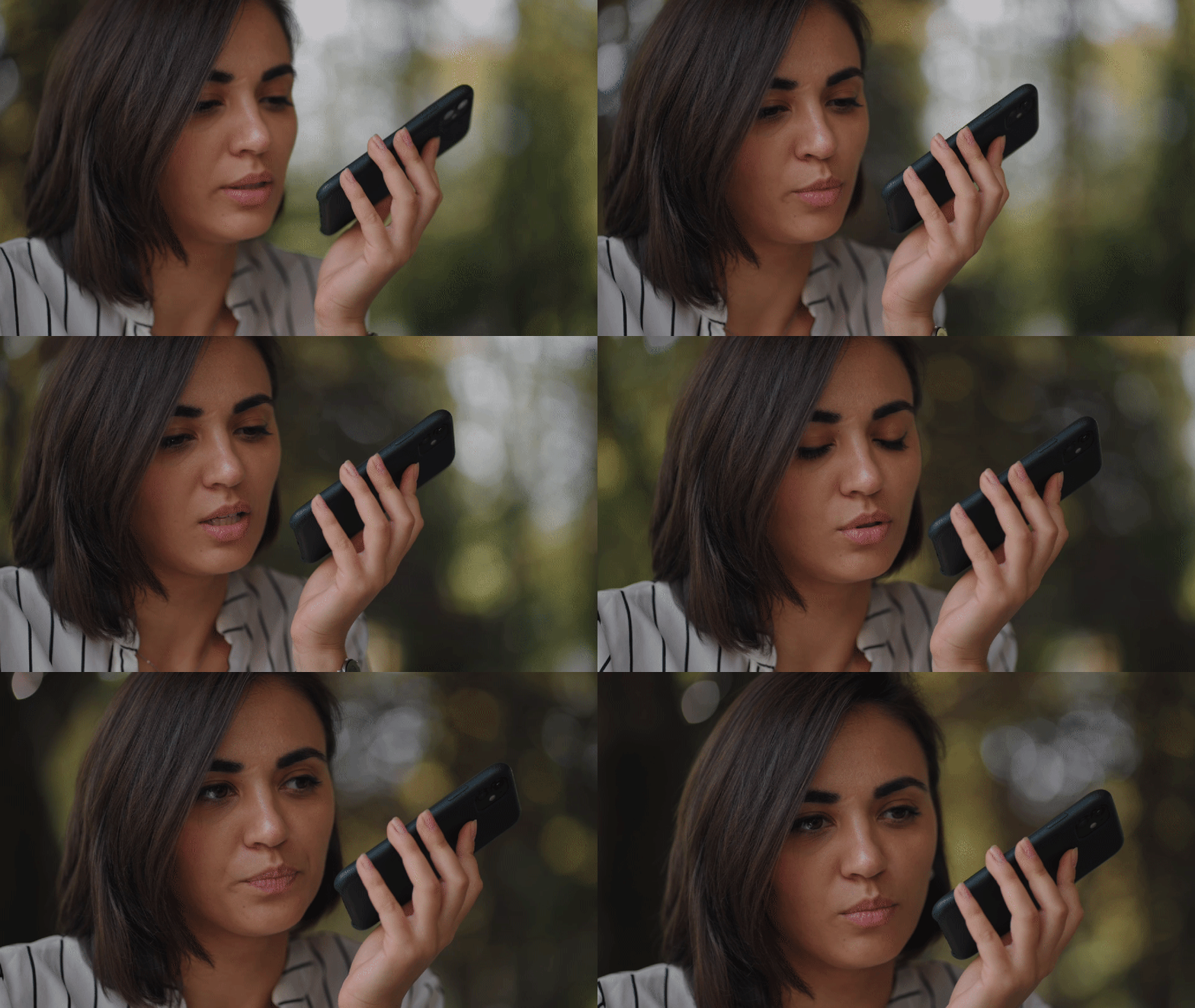
Here are enlightening reasons to make anxiety journaling a part of your routine and how it can transform your mental health journey.
# 1. Acknowledging and Accepting Your Feelings
Imagine you’re feeling overwhelmed at work due to a high-pressure project. By getting your thoughts and worries off your chest and into your journal, you’re taking the first step in acknowledging them. This is similar to sharing your concerns with a trusted friend. Seeing your worries in black and white or nicely packaged in your app can make them more manageable and less intimidating. Work through your feelings until they no longer exert power over you. Past that point you’ll see your own solutions emerge.
# 2. Providing Clarity in Confusing Times
When your mind feels like a tangled web of thoughts, turning to your anxiety journal can help untangle it. By transferring your thoughts onto paper or an app, you gain clarity and can approach your concerns with a fresh perspective. Take the example of grammy-award winning artist Noah Kahan, who poured his mental health struggles into more than 730 songs!
# 3. Identifying Triggers and Patterns
After a few days or weeks of checking in with yourself, you notice every Sunday evening your anxiety spikes. This pattern suggests that the anticipation of the workweek could be a trigger. With this insight, you can implement relaxation techniques every Sunday night to ease into the week ahead. Or you make it a ritual to go outside for a walk with your pet to get unconditional affection and immerse yourself in nature.
#4. Creating a Personalized Coping Strategy
Through journaling, you may discover that social gatherings can make you anxious. Not everything is a sign of social anxiety, but if you identify a trend, you may want to find out soon. To cope, you could plan to take breaks during events or speak into your audio journal beforehand, to release tension. Over time, you tailor these methods to fit your needs, creating a personal toolkit to turn anxiety into your superpower.
#5. A Personal Commitment to Mental Health
Setting aside time to write is a commitment to your mental well-being. It’s a self-care activity that prioritizes your psychological health, similar to going to the gym for your physical health.
If countless celebrities with insane schedules keep an anxiety journal as a versatile and potent strategy for managing their mental health and overcome performance anxiety, you can, too. It’s not just about recording fears and worries; it’s about discovering oneself, finding peace, and developing a healthier mind. Whether this leads to healthier lifestyles and the breaking free from bad habits like overnight success and supermodel Gisele Bündchen,
or just making sure you can retell your unique journey some day in the future.
#6. Enhancing Self-Confidence and Self-Understanding
Revisiting your anxiety journal and rereading past entries can make you realize how you’ve successfully navigated various challenges. This reinforces your self-confidence and understanding of your resilience. Over time your self-perception will turn into a positive and motivating one.
#7. Providing a Space for Self-Compassion
On days when you’re particularly harsh on yourself, writing down or recording affirmations in your anxiety journal can be a form of self-compassion. You might write, “I am doing the best I can, and that’s enough,” giving yourself the same kindness you would offer a friend. “Today’s presentation was not the best and I know it. That’s why I will learn and grow from it.” If you’re not in your team, who is?
#8. Encouraging Mindfulness and Presence
If you find your mind wandering with worries about the future, sitting down to journal can bring you back to the present. The act of focusing on your audio-recording or writing can function as a meditative practice. Tell yourself that this is your time and yours alone. It is a gift to yourself, an investment into your wellbeing.
#9. Tracking Progress Over Time
Looking back at entries and stats from a year ago, you may notice how the issues that once caused you significant distress now seem more manageable. This progress tracking can be a source of motivation and a reminder of the growth you’ve achieved. Print out the stats or passages you are most proud of, share your learnings with others and celebrate your wins, no matter how small.
#10. A Companion in Therapy
The it does not stop there. Sharing your journal entries with a coach, mentor or therapist provides a starting point for discussions during sessions. This not only enriches your session but also makes it more efficient and specific about your unique situation. It’s like having a personal record that reflects your emotional journey, enhancing the therapeutic alliance.
#11. A Safe Outlet During Intense Moments
In moments of high stress or panic, writing or voice-recording can serve as a safe outlet, a way to channel intense emotions, reducing their intensity and providing immediate relief.
If you journal with the help of a personal AI chatbot, you’ll even get a real-time reply and can chat until you feel your anxiety subside.
#12. Encouraging Creativity and Self-Expression
Your anxiety journal doesn’t have to be all text or recordings. Drawing, doodling, or using color can be additional ways to express and process emotions, tapping into the creative parts of your brain. What matters is that you make time for it without feeling like your anxiety journal is another task on top of everything else.
#13. Improving Sleep and Reducing Night-Time Anxiety
Writing or recording before bed, especially to capture positive experiences or things you’re grateful for, can clear your mind and improve sleep quality. It can be a soothing ritual that signals your brain it’s time to rest and let go of the day’s worries.
#14. Cultivating Powerful Mindshift Techniques
By dedicating parts of your journal to gratitude, you can shift focus from worries to positive aspects of life, fostering an optimistic outlook. You might list small joys, like a relaxing morning tea, a compliment received or a beautiful tree you saw on your way home.
This isn’t some woo-woo advice for treehuggers. There is solid science out there on how your thoughts and behaviours can be rewired to your advantage.
#15. A Historical Record for Future Reflection
Years from now, you’ll have a historical account of your life’s emotional landscape. Life is short and precious. These entries will serve as artifacts of your resilience and personal evolution. They will keep your memories alive and make you grateful for all the challenges you’ve overcome, people you met and lives you touched.
#16. Fostering a Sense of Achievement
Every time you jot down your thoughts and confront your anxieties, you accomplish a small victory. Keeping an anxiety journal allows you to see these victories laid out, building a sense of accomplishment over time. It’s a reminder that every effort, no matter how small, counts in your mental health journey.
#17. Providing Clarity in Confusing Times
When your mind feels like a tangled web of thoughts, turning to your anxiety journal can help untangle it. By transferring your thoughts onto paper or an app, you gain clarity and can approach your concerns with a fresh perspective. Take the example of grammy-award winning artist Noah Kahan, who poured his mental health struggles into more than 730 songs.
#18. Offering a Non-Judgmental Space
Your anxiety journal is a judgment-free zone. Unlike conversations with others, where fear of judgment might prevent full disclosure, your journal accepts everything you say without criticism. This unconditional acceptance is vital in cultivating a safe space for healing. Just think of the constant harassment climate activist Greta Thunberg had to endure since childhood. Keeping an anxiety journal and turning her mental health challenges into action not only helped her cope, but also inspired millions of people around the globe.
#19. Aiding in Decision Making
You are and will continue to be faced with tough choices in your life. Taking down your pros and cons, fears, and hopes in an anxiety journal can help in the decision-making process. It allows you to process your thoughts and emotions methodically and at your own pace. You’ll be empowered to make more grounded and thoughtful decisions. Also, when discussing an upcoming tough choice with a trusted person, you’ll have a treasure of collected data to enrich that conversation.
#20. See the Effects of Therapy or Medication
If you’re undergoing therapy or taking medication for your mental health, your anxiety journal can help track the effectiveness of these interventions. Noticing changes in the frequency and intensity of anxious thoughts or mood swings can be a solid indicator of progress. This not only makes your mental health journey more data-driven and objective, but it also gives you more agency over your decision to continue or discontinue your current approach.
#21. Encouraging a Sense of Ownership Over Your Journey
By actively writing or voice-recording in your anxiety journal, you’re taking ownership of your mental health – no matter whether it is in a low, so-so or on a high. Ride the entire roller-coaster journey and own it. This proactive approach can fortify your resolve to face any kind of anxiety or stress head-on, rather than feeling passively swept away by it.
#22. Enhancing Communication Skills
Regular journaling can improve your ability to articulate thoughts and feelings, which can then translate to better communication with others. It’s a way of practicing self-expression, which is invaluable in all areas of life. If creative writing classes or extra-curricular courses are out of reach because of financial or time restraints, start your anxiety journal. Maybe you’ll turn it into a famous book or a precious gift for generations to come.
#23. Acting as a Tool for Crisis Management
During times of crisis, your anxiety journal can serve as a blueprint for what’s worked in the past. You can refer to strategies and coping mechanisms that helped you through previous challenges and apply them to the current situation.
Just be reminded, that the practice of journaling is deeply personal and there is no right or wrong way to do it. Whether you prefer a leather-bound notebook or a personal AI chatbot or a digital app, the act of pouring out your inner thoughts is what truly matters.
So, why not give anxiety journaling a try? It could be the key to unlocking a more peaceful and self-empowered state of mind. In a world where we are constantly bombarded with stimuli and pressures, it’s no wonder that many of us grapple with anxiety on a daily basis. Let’s go out and reclaim control over our lives one check-in at a time.
Now stop scrolling and go select YOUR anxiety journal!
