

Entrepreneur, Senior Leader & Ecosystem Builder with a degrees in Music, Psychology, Digital Mgmt & Transformation. Co-founder of the Music Factory and Earkick. Life-long learner with a deep passion for people, mental health and outdoor sports.

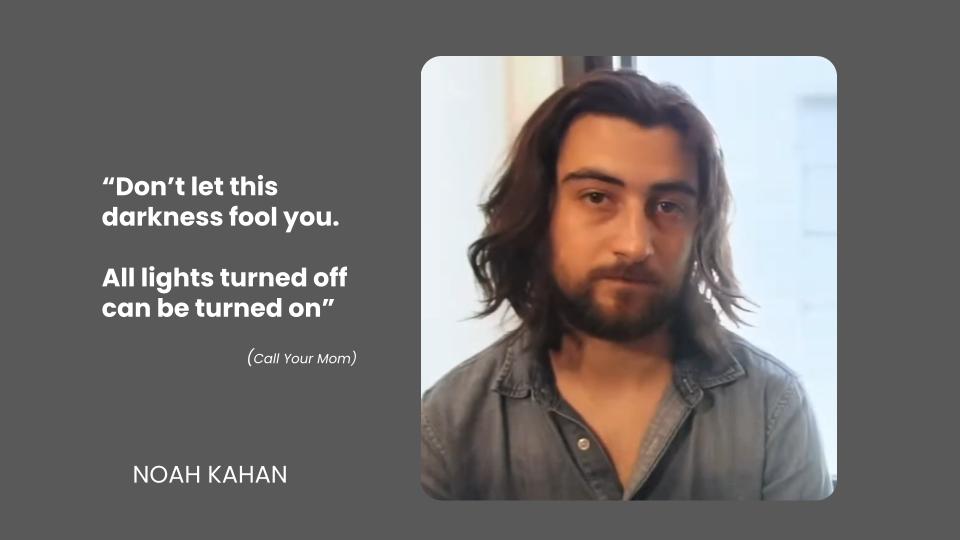
Noah Kahan, the award-winning singer-songwriter from Strafford, Vermont, has captured the hearts of listeners worldwide with his emotive melodies and introspective lyrics. Kahan is seen as a GEN Z hero who is making folk music cool by being a brutally honest storyteller and keeping his music simple.
By POPDUST, CC BY 3.0, https://commons.wikimedia.org/w/index.php?curid=140835306
Beyond his musical prowess with over a billion global streams, Kahan’s journey is marked by candid discussions about mental health. From early on, he has been open about his struggles, sharing his experiences with anxiety, depression, depersonalization, and imposter syndrome. Through his music, Kahan not only invites listeners into his world but also sheds light on the complexities of mental health.
If these topics resonate with you, you can chat with AI for insights and support on mental well-being.
In this article, we’ll uncover not just a brilliant musician, but one of the most courageous advocates for mental health acceptance, especially focusing on depression men’s mental health quotes.
Prelude to Passion: Childhood Origins of Songwriting
Encouraged by his parents, Kahan grew up writing songs. At the tender age of eight he started to express his thoughts and feelings through words and music. Just like countless artists before him, Kahan uses his way of journaling to process the complexities of life. That’s how writing songs became not just a passion but an essential escape for him.
And I’ll put all my pieces back together
(MESS)
Where they belong, and I’ll say
“I’m a mess, I’m a mess, oh God, I’m a mess”
For Kahan, songwriting isn’t just a craft; it’s a lifeline, a way to make sense of the chaos and find a sanctuary in his music. In TIME, he writes that “putting words to my mental health struggles saved me”. He has likely been through it all, scribbling down lyrics, crafting tunes, and sifting through a sea of bad songs.
Not ashamed of those early misses, Kahan embraces them, knowing that one has to write a bunch of crap to eventually strike gold. “Every single bad song led me to the good ones” underscores his belief that songwriting is akin to a muscle, requiring constant exercise to maintain its growth, strength and flexibility.
Daily Discipline: Noah Kahan’s Commitment to Craft
Kahan’s dedication to his craft is exemplified by his commitment to write a song daily for two years, creating “hundreds of songs that never saw the light of day”. This disciplined approach resulted in a treasure trove of compositions, each an expression of his evolving life and deep passion for music.
In recent time, TikTok has become a vital tool for Kahan’s creative process, offering him a platform to share raw and early versions of his songs. Whether it’s him sitting on on the toilet singing about brick walls or even including Santa in his craft
By posting snippets of his work-in-progress, Kahan not only gathered immediate feedback from his audience and gauged the potential of each track, he also got a sense of collaboration and community around his work. In Tiktok Kahan found a unique outlet to share his creative journey in real-time, offering audiences an interactive backstage pass to the evolution of his songs.
Sadly he had to let go of it when the UMG catalogue was pulled off Tiktok in February 2024, silencing many of his legendary shorts, including the the incredible moment Kahan found out he was nominated for a Grammy, which he later won.
Therapeutic Tunes: Noah Kahan’s Songwriting as Self-Discovery
But for Kahan, songwriting is more than just an award-winning profession; it’s a therapeutic process through which he navigates his emotions and explores the depths of his soul.
Kahan wants his writing to be relatable and specific. This means talking about what he really feels in specific moments, not just general stuff. “It’s uncomfortable to be specific and vulnerable about your personal life, because there’s always the fear that others may not relate to it.”
In his songs, Kahan confronts the raw realities of life, delving into topics ranging from the pain of his parents’ divorce to struggles with body image and substance abuse. Sharing his stories is not only therapeutic for himself, it also serves to extend hope and encouragement to everyone struggling with the same issues.
I won’t be alone for the rest of my life
(Forever)
I’ll build a boat for when the river gets high
Many depression men’s mental health quotes stress the importance of being vulnerable during tough times.
Kahan knows from his own experiences how valuable this can be: “I remember when I was a little kid and I would hear a song and the artist would say something that I felt only I had felt in my life. And it would change my entire week and I would walk around with a pep in my step because someone else finally understood what I thought was so alien to someone else.”
To Kahan, providing that moment for somebody in pain and making them feel heard and less alone in their every day struggles is worth all the discomfort that comes with sharing deeply private experiences.
Taking it slowly, I’m afraid to be lonely.
(Hurt somebody)
Nobody told me it’s harder than I thought to tell the truth.
It’s gonna leave you in pieces, all alone with your demons.
And I know that we need this, but I’ve been too afraid to follow through.
A Shared Feeling of “Alone Together”
For Kahan, the impact of his music needs to be about connection and understanding. Reflecting on his own struggles, particularly during the isolating times of the pandemic, he emphasizes the importance of addressing feelings of loneliness and alienation.
Now I am stuck between my anger and the blame that I can’t face
(Stick Season)
And memories are somethin’ even smoking weed does not replace
And I am terrified of weather ’cause I see you when it rains
Doc told me to travel, but there’s COVID on the planes
He acknowledges the paradox of feeling alone amidst a crowd, a sentiment many can relate to. Through his music, Kahan seeks to reach out to those who feel adrift, reassuring them that they are not alone in their struggles. He aims to provide solace and companionship to those who feel left behind or disillusioned by life’s twists and turns.
“I want people to feel heard and connected to something because that’s what I desperately needed in those times.”
There’s another reason that Kahan embraces the discomfort of sharing his struggles openly rather than shying away from them. Great art is uncomfortable and often emerges from moments of vulnerability. “If I feel scared about what I’m saying, if I feel uncomfortable and I cringe at the honesty that I try to get through, I feel like it’s a good song,” he reflects. “To present no challenges is to present no substance.”
Growing Sideways Because Healing Takes Time
When Kahan puts out a song it is the truth. He truly shares what’s going on and knowing that that’s the truth is powerful to him. It allows him to choose whether he wants to deal with it or not. Although he had access to therapy from early in his life, Kahan remembers going to the sessions and lying to the therapist.
In hindsight, he regrets wasting so much valuable time due to not being honest about how he really felt. Kahan learned the hard way that telling the truth is the first step towards healing.
However, he often doesn’t get to choose how long it takes to fully work through a challenge.
“There is nothing worse than singing a song like Growing Sideways and knowing that you are still in that place.” Kahan has been there with a few songs and knows how difficult it can be to sing deeply painful lyrics while still being in the thick of it. “There’s no perspective on it, it’s just wallowing in it and playing it every day.”
But I ignore things, and I move sideways
(Growing sideways)
Until I forget what I felt in the first place
At the end of the day I know there are worse ways
To stay alive
Scarier even to hear people say how that particular song helped them get through their mental health issues and realize they are growing from hearing Kahan’s lyrics while he himself is still stuck in the same problem.
So, he’s made it a principle to listen to what he’s saying and to act on it.
Hiding in Plain Sight: You must be healthy, cause you don’t look sick
Listening closely and reflecting deeply also emerged as an opportunity for early detection. Kahan’s unreleased song “Shape of my Shadow” for example, helped him identify an underlying mental health issue.
Writing that song opened his eyes to how he was feeling about himself, how much he disliked his eating habits and the way he looked: “It was really hard for me to come to terms with that. Something I’m still working on.” Writing lyrics often creates clarity about an underlying problem Kahan says he doesn’t realize he has until he sits down with the guitar and starts playing.
There’s somebody in my body
He’s awake when I’m asleep
And he’s making me feel ugly
And he’s making me feel weakI met him when I was younger
(Shape of My Shadow)
And he’s lived with me since then
And we argue with each other
In the end he always wins
Of course, Kahan hopes that he doesn’t need to sit down and make songs to find out what’s going on with himself. He’s working hard on being able to come to those conclusions in his day-to-day and deal with them in a more healthful way.
Aware of the demands of his profession, Kahan emphasizes the need for self-care, recognizing that in order to continue his mission of connecting through music, he must first maintain his own well-being.
Yes, I’m young and living dreams
(No complaints)
In love with being noticed
And afraid of being seen
Seeking Equilibrium: Noah Kahan’s Quest for Balance
That leads us to the question of medication that a lot of creative people face. Kahan grapples with the fear that medication might dull his creativity. Losing your emotions as an artist can feel like dying.
On the other hand, he’s painfully aware of the toll that untreated depression takes on his overall well-being. Despite the challenges, Kahan remains steadfast in his commitment to authenticity and self-expression through music.
You got all my love while I’m still out here
(All my love)
With the pills and the dogs, if you need me, dear
I’m the same as I was, it’s all okay
There ain’t a drop of bad blood, it’s all my love
Like many creatives, he wants to get better at channeling negative and overwhelming emotions creatively. After all his artist self and his human self aren’t two separate things and he knows he can’t ignore one for fear of losing the other. Balancing both is possible and Kahan hopes to achieve a level of self-awareness and emotional equilibrium that transcends the need for songwriting as a therapeutic outlet.
The Path to Freedom: Gratitude, Growth and Trust
Through all his sticky seasons, Kahan remains grounded in gratitude, recognizing the privilege of sharing his music with the world and the responsibility that comes with it. He doesn’t take his success for granted. Instead, he embraces each opportunity with intentional gratefulness and keeps building his capital of trust.
Owning the trust and belief of his audience, his band, his management and his community means freedom. That freedom requires continuous dedicated work and Kahan is willing to put in.
And it doesn’t stop there. In May 2023 Kahan announced his mental health initiative The Busyhead Project that surpassed its original goal to raise $1 million dollars in October 2023 and has since generated $1.9 million dollars and counting. The means will go towards organizations that deliver AI mental health treatment and improve access to care in underserved communities.
And we’ll all be here forever
(You’re gonna go far)
You’re gonna go far
Take the first step towards better mental health — chat with an AI therapist today.
