

Entrepreneur, Senior Leader & Ecosystem Builder with a degrees in Music, Psychology, Digital Mgmt & Transformation. Co-founder of the Music Factory and Earkick. Life-long learner with a deep passion for people, mental health and outdoor sports.


Fast Facts
- Tight muscles hurt and keep your nervous system on edge
- Limited mobility can prolong stress and anxiety
- Small, consistent movement signals safety to your brain
- Instead of workouts, give better daily movement habits a try
It’s one of those afternoons where nothing is technically wrong… but nothing feels right either. You check your phone, shift in your chair for the fifth time, open another tab without knowing why. All you understand is that your brain keeps searching for something. Is it relief, distraction, or a reset button that is hiding behind the unrest? You’ve never even heard of the mobility trap…
So you try the usual fixes. Deep breath, maybe a podcast, or telling yourself to just relax. Then you notice the exact opposite is happening. Your shoulders have been creeping up toward your ears, your jaw is locked, and your body hasn’t moved in any real way for hours. And without asking you, your systems already made a decision:
We’re not safe enough to relax yet.
So your body reaches the simple conclusion that it needs to stay alert. And your mind follows your body’s lead. This article dives into why a braced, restricted body keeps your system in a guarded state and how enough mobility and an open body create the conditions for your mind to settle.
Why Your Body Keeps You Stressed
Stress is a full-body production and much more than just a thought. Life is moving, and your body moves with it, whether you’re replying to a message, switching between tasks, or half-listening on a call. Your nervous system flips into ready mode, always trying to conserve energy, brace for potential danger, and stay sharp. That program served humans perfectly for survival, and it tries to do the same today. The difference is that you’re no longer roaming the savanna, and the dangers are now lurking in your inbox, your endless notifications, or that mental scrolling loop, rather than behind the next bush.
Your body, however, keeps its ancient way of reading your day like a map of threat and safety. Every hour of stillness, shallow breathing, and limited movement sends updates to your brain: alert is the default. That’s the mobility trap in action.
Your autonomic nervous system interprets posture, muscle tension, and breath as ongoing danger.
The Subtle Signs You’re Stuck in a Stress Loop
The way your body sends whispers through tension, stiffness, and fatigue is very subtle. These signals show up in ordinary moments, and it’s easy to overlook them:
- Your neck locks the instant a stressful email pops up
- Standing up after hours of sitting makes your lower back sag under invisible weight
- Walking a few flights of stairs feels like running a marathon for your system
- Sitting down to relax triggers micro-adjustments instead of comfort
- You wake with tight hips and shoulders that have already worked overtime
Each moment reinforces the same loop. Tension builds, movement shrinks, and your brain interprets the body’s bracing as ongoing alertness. That creates more anxiety and stress, which again translates into more tightness in your muscles. Tighter muscles then translate into limited movement, and limited movement sends the same signal back to your nervous system:
The environment requires vigilance.
The real danger after your day feels off, and the body runs the same program again and again, is in the conditioning. You get used to it. Your braced posture, shallow breaths, and stiff hips start feeling like “normal.”
How to Break the Stress Loop with Mobility
Breaking free from stress and getting out of the mobility trap starts small. Forget 90-minute workout, fancy gear, or expensive classes. Begin by giving your body permission to move in tiny, meaningful doses. Every joint, every breath, and every stretch is intended to become a signal that reads
“It’s safe. You can soften now.”
Micro-Mobility Moves That Calm Your Nervous System
Think of your body as a security system where tense muscles trigger the alarm to stay on. Gentle movement acts like a friendly override. It tells your brain, “All clear. You can let go a little.”
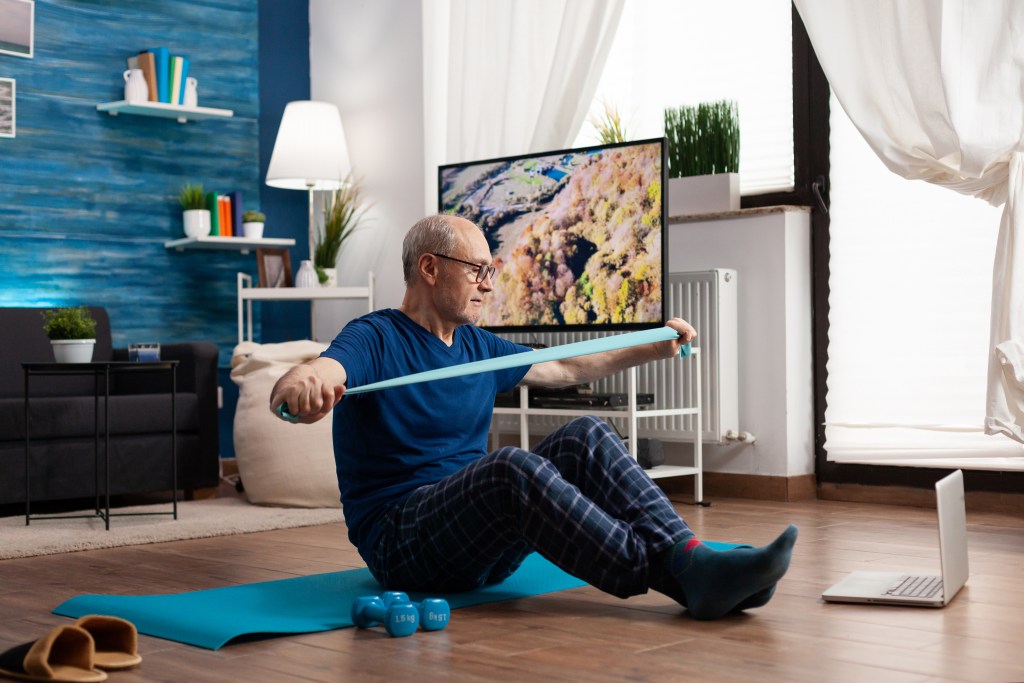
Here’s what that looks like in real life:
- Neck and shoulders: Tilt your head slowly from side to side while you wait for your coffee to brew. Shrug and roll your shoulders between emails. Tiny movements, yet huge nervous system payoff.
- Spine and chest: Stand up and do a gentle twist while holding your desk. Open your chest like you’re reaching for something just out of reach. Even 30 seconds resets tension and signals safety.
- Hips and legs: Take five minutes for controlled hip circles or a low lunge when you feel stiffness creeping in after sitting. Your hip capsule remembers freedom more than you think.
Tiny Daily Rituals That Rewire Your Body for Safety
Rather than thinking of these mobility hacks as gym moves, think of them as micro-habits you can sprinkle into your day without changing your schedule.
Your nervous system interprets every full, pain-free movement as a safety cue.
Breathing deeply while moving amplifies the effect, and consistency beats intensity here. Two minutes, three times a day, signals more safety than one exhausting hour of exercise. Your body remembers patterns, so repeated movement gradually teaches it that it’s okay to drop the guard.
Even small rituals make a difference:
- Rock gently on your heels while standing, pretending you’re pacing with purpose
- Stretch your arms overhead while imagining you’re reaching for a sunbeam
- Roll a tennis ball under your feet while watching TV, and your tension melts where you never thought to look
- Do it together with your partner, a friend, or colleague and turn it into a shared experience while doubling the benefits.
For more ideas on how daily movement can keep your body resilient and flexible, check out this article on how body recovery works. Even a few minutes of smart, consistent movement each day rewires your system toward calm.
The good news is that your body is easy to convince. You don’t need to solve stress and anxiety first, because you can interrupt it physically.
Try this right now:
- Roll your shoulders back.
- Lift your chest slightly.
- Take one slower, deeper breath.
That tiny shift already changes your internal signals. So, when you move a joint through its natural range, such as neck, spine, or hips, your body sends feedback to your brain:
“We’re safe enough to move.”
That matters because it’s the same idea behind routines focused on supporting flexibility with age. People expect better mobility. What they don’t expect is feeling calmer, clearer, and less reactive, because their body finally stops broadcasting tension all day.
Turn Your Body Into a Mobility Playground
What if your body could play tag with gravity, tumble into freedom, and giggle while teaching your nervous system it’s safe? That’s what a mobility playground feels like. Every swivel, shimmy, and sway is a message to your system to relax because all is safe.

Picture leaning backward into your chair just a little too far, feeling your spine murmur a surprise hello. Twisting your torso like you’re trying to peek behind a corner you can’t see. Rocking on your heels like a kid in line at the ice cream truck. Make these moments your very own way of rebelling against stiffness. They are invitations to curiosity, to experimentation, and to noticing what your body can do instead of what it’s stuck doing.
Your workplace, your kitchen, your living room, or any space becomes a lab for discovery. Every small action, even rolling your shoulders between emails or tracing circles with your toes while waiting for the kettle, becomes an experiment in safety. The more you explore, the more your body learns that tension is optional and ease is possible.
The playground never closes, and the first rule is simple: move like you mean it, in ways that surprise even you. Let those wobbles, sways, and stretches happen and rewire the system in the best possible way.
Now stop scrolling and roll your shoulders back three times!
