

Entrepreneur, Senior Leader & Ecosystem Builder with a degrees in Music, Psychology, Digital Mgmt & Transformation. Co-founder of the Music Factory and Earkick. Life-long learner with a deep passion for people, mental health and outdoor sports.

Your child sits down with a math worksheet. Two minutes later, the pencil freezes. Their shoulders creep up. You see it in their face before they say a word: “I can’t do this.” For many kids, math feels more than tricky. It feels threatening, and researchers call this math anxiety.

It shows up as fear, tension, or panic during anything number-related and it can kick in surprisingly early. If your kid talks to Earkick, you may have noticed that pattern already. Studies suggest that signs of math anxiety can appear around age six and then track kids for years. Some reports estimate that up to a quarter of students experience meaningful math anxiety at some point in their school lives.
This anxiety does more than ruin homework time. It also affects how the brain works. When a child feels stressed about math, worry takes up working-memory space, the mental “scratchpad” they need for calculations and problem-solving. Kids with higher math anxiety tend to avoid efficient mental strategies and solve fewer problems correctly, even when they have the ability.
The good news is: you can help. With the right mix of emotional tools, everyday math practice, and targeted support, kids can move from “I can’t” to “I can figure this out.”
What Is Math Anxiety?
Math anxiety is an intense emotional reaction to numbers, calculations, or math situations. It can show up as:
- A racing heart or tight chest during math homework
- Blank mind in tests, even when they studied
- Avoidance of math problems or subjects
- Big emotions when they see a word problem or an equation
Scientists define it as a state of discomfort or fear that interferes with math performance. It clearly differs from laziness. Math anxiety means the nervous system is treating math like a threat.
Over time, the condition and performance feed into each other. Kids who feel anxious solve fewer arithmetic problems correctly and use fewer flexible, higher-level strategies.
When that happens often enough, they start to believe “I’m just bad at math,” which ramps up anxiety even more.
Why So Many Kids Feel Scared of Numbers
Math anxiety rarely comes from one source. It is usually a cluster of influences that pile up over time.

1. Adult Attitudes That Kids Absorb
Children listen to how parents and teachers talk about math. When adults say things like “I was never a math person” or “Math is just hard,” kids often adopt that fear as their own. Large international reports show that students’ anxiety around math is closely tied to the climate of their school and how they compare themselves to classmates.
If the message around them is “math is scary, and only some people get it,” anxiety grows.
2. Classroom Stress and Time Pressure
Timed tests or being called on without warning can fuel math anxiety. The same goes for public mistakes on the board, or feeling slower than peers. All these situations crank up the internal alarm and make every exercise feel like a race. As a result, kids shift from learning mode into survival mode.
3. Gender Stereotypes And Social Messages
Many studies report that girls, on average, score higher on math anxiety scales than boys, even when actual performance is similar. Gender stereotypes (“boys are better at math”) still float around classrooms, media, and homes. Kids internalize these messages early, and they shape self-belief long before any exam result shows up.
4. Existing Anxiety, Perfectionism, And Learning Differences
Some kids already have big feelings around performance, mistakes, or school in general. For them, math becomes the “perfect storm”: clear right/wrong answers, time pressure, and visible comparison with classmates.
On top of that, there are specific learning differences like dyscalculia, a difficulty with number sense and arithmetic. This condition impacts roughly 3–6% of children.
When nobody spots this, a child may experience repeated failure, which their brain labels as “I’m hopeless,” instead of “My brain needs a different way in.”
How To Calm Their Nervous System
Before you tackle fractions or word problems, you help the body stand down. A calmer nervous system makes room for thinking.
1. Teach Their Body a “Math Safety” Signal
When kids face a scary worksheet, their breathing speeds up and gets shallow. Their heart rate climbs, their muscles tighten. This stress response steals the working memory they need for mental math.
A simple reset that works immediately is belly breathing:
- Ask them to place one hand on their chest, one on their belly.
- Inhale through the nose for a count of four so the belly hand rises.
- Exhale slowly through the mouth for a count of six.
- Repeat for 6–8 breaths before or during math time.
Deep, paced breathing can reduce exam anxiety and improve test performance by changing how kids think about the test. You turn breathing into a tiny, science-backed “superpower button” they can press anytime numbers start to spike stress.
2. Use Mindfulness to Tame Test Panic
Mindfulness is the practice of bringing attention back to the present moment without harsh judgment. In math, it might sound like:
“Right now, I am reading the problem. I feel my feet on the floor. I can breathe slowly even if my brain feels busy.”
Short, regular exercises can lower physical math anxiety symptoms, reduce test-unrelated thoughts, and boost math performance.
You can try:
- A 1-minute “focus pause” before homework
- A quick “notice five things” grounding exercise in the exam line
- A ritual phrase like “One step at a time. I read, I think, I try.”
Build Math Into Everyday Life
If math only lives in classrooms and test booklets, it feels like a trap. The more kids meet math in daily life, the more familiar and less threatening it becomes.

3. Turn Real-World Moments Into Low-Pressure Math
Invite your child into everyday number decisions:
Grocery store:
- “We have 10 dollars for snacks. If we buy this for 6, how much is left?”
- “Can you estimate what our cart will cost before we reach the checkout?”
Cooking and baking:
- “The recipe serves four, and we need it for two. What happens to each ingredient?”
- “We have a ⅓ cup scoop. How many scoops make one cup?”
These moments keep math grounded in something tangible: food, money, time. Math anxiety eases when math answers actually do something in real life.
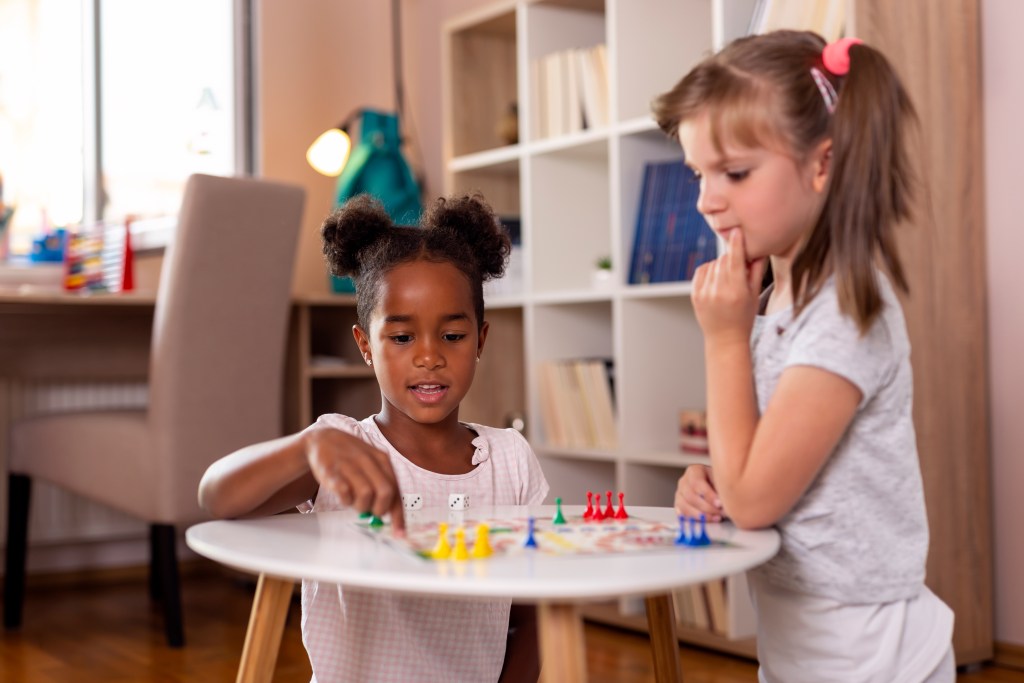
4. Play Games That Sneak In Numbers
Games are math’s Trojan horse. You can boost number confidence while your child thinks you are “just playing.”
- Dominoes or card games: Think counting, comparing, basic probability
- Board games with dice: This includes counting spaces, adding totals, budgeting in-game money
- Fraction or percentage twists: “Whoever gets closest to half the pile wins.”
Some flashy, highly competitive games can increase stress for already anxious kids, especially if visuals or timers are intense. Visually dense math games can increase math anxiety for some students, depending on working-memory capacity.
So lean toward cooperative, slow-paced, laughter-heavy games rather than “beat the clock” challenges.
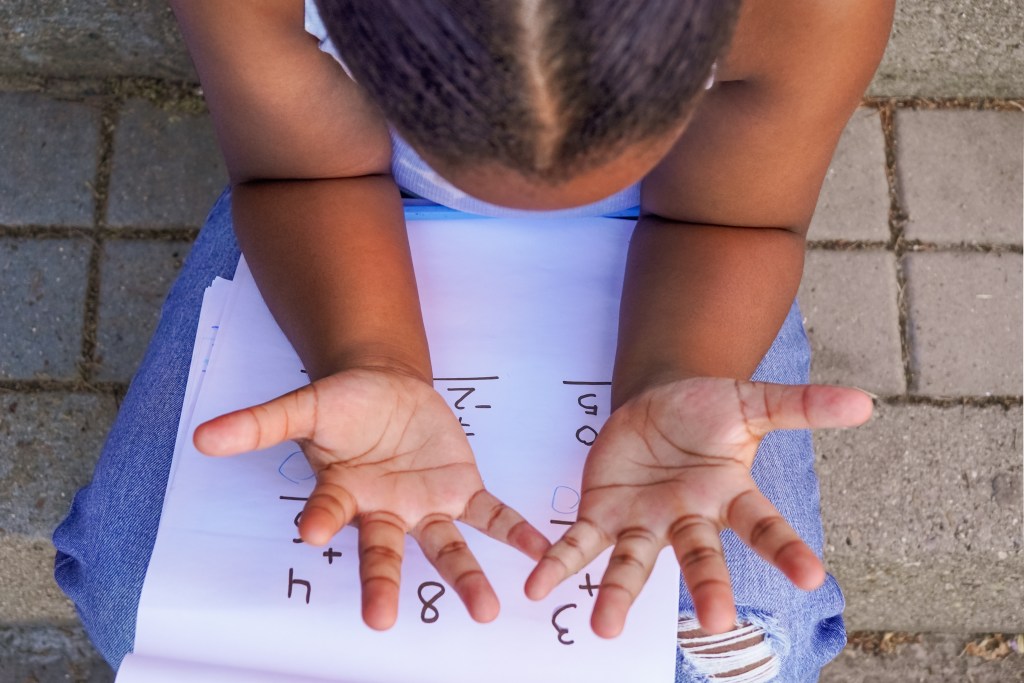
5. Let Fingers Help
For years, adults told kids to “stop counting on your fingers.” Newer research suggests that finger use in early years is actually a powerful support for later mental arithmetic. Children who used their fingers in early primary school and then gradually moved away from them around age seven showed stronger calculation skills than kids who never used fingers.
So if your child tracks on their fingers while working through sums, treat it as a smart bridge!
Bring in Specialist Support
Sometimes love, patience, and kitchen-table practice still hit a ceiling. That is your cue to widen the circle.
6. Tailored Tutoring Instead Of Endless Worksheets
One-on-one or small-group tutoring can do something regular class time cannot: match pace, style, and explanations to your child’s real starting point. Research shows that cooperative and individualized learning environments can soften math anxiety and support performance, especially when emotional climate and working memory are taken seriously.
If you want to explore structured support beyond school, online tutoring platforms can help children learn at a comfortable pace. One example is Brighterly, which offers 1-on-1 math sessions designed to build confidence, reduce pressure, and strengthen foundational skills: https://brighterly.com/
Good tutors:
- Start with what your child can do
- Build tiny wins in each session
- Model calm responses when the child gets stuck
- Celebrate process, rather than just right answers
The goal is experiences where your child’s brain learns, “Math time can feel safe and successful.”
7. Lean on Expert-Designed Resources
Carefully chosen resources can give kids independent “practice playgrounds”:
- Printable worksheets that build skills step by step
- Short online quizzes with instant, gentle feedback
- Interactive games that reward effort and strategy, not only speed
Some kids enjoy working through these solo and checking answers themselves. Others prefer doing them alongside you. Either way, keep the focus on noticing progress, not perfection.
8. Check For Learning Differences
If your child:
- Struggles with basic number sense
- Mixes up quantities even after many explanations
- Feels completely lost with time, money, or simple calculations
it might be worth asking their school or a specialist about a proper learning assessment. It can unlock accommodations, targeted support, and a new story: “My brain works differently with numbers. I need different tools.”
Create a Low-Shame Math Climate
Anxiety thrives in environments that feel judgmental, rushed, or unsafe. Your job is to flip the script.
9. Watch Your Own “Math Talk”
Kids are experts at emotional copy-paste. When parents or teachers talk about math with dread, eye rolls, or self-insults, children receive the message:
Numbers are dangerous territory.
Math anxiety research highlights how strongly students’ feelings mirror adult attitudes in their environment.
Try micro-shifts:
- Swap “I was terrible at math” for “Math was tricky for me and I learned ways through it.”
- Swap “This is hard” for “This needs a few steps and we can take them.”
Remember that your tone becomes part of your child’s internal voice.
10. Loosen the Time Pressure
Sometimes you cannot change school tests, but you can change the rhythm at home.
- Offer untimed practice where they can think, erase, and try again.
- Break big assignments into small, clear chunks.
- Use timers only for breaks, not as countdowns for panic.
International assessments show that students feel more anxious when they constantly compare themselves to top performers at their school. At home, you get to remove the invisible audience and rebuild math as a private skill, not a constant race.
11. Normalize Asking for Help
Many anxious kids hide their struggles to avoid looking “stupid.” You can reframe help as a strength:
- “Smart people ask questions early.”
- “You and your brain are a team. This is the part where you call in backup, not the part where you give up.”
When help-seeking feels safe, kids catch misunderstandings earlier, which lowers anxiety over time.
Raise a Human, Not a Calculator
At the end of the day, math anxiety in kids is not only about numbers. It is a story about how they meet challenge, how they talk to themselves when something feels difficult, and how safe they feel asking for help.
When you teach calming strategies, sneak math into everyday life, and pull in smart support, you are doing more than fixing homework battles. You are training a nervous system to stay curious under pressure. That means giving a future adult the skills to walk into stressful rooms, take a breath, ask for help and think clearly.
That’s the equation you are really solving!
Now stop scrolling and go plan the first move!
