

Entrepreneur, Senior Leader & Ecosystem Builder with a degrees in Music, Psychology, Digital Mgmt & Transformation. Co-founder of the Music Factory and Earkick. Life-long learner with a deep passion for people, mental health and outdoor sports.


By Karin Andrea Stephan & Herbert Bay, Founders of Earkick
The tragic loss of 14-year-old Sewell Setzer III has left us shaken to the core. As parents and professionals building in mental health and artificial intelligence, our hearts ache for Sewell’s family and friends. No parent should ever have to bury a child; losing a child is an unimaginable pain that no one should endure. This isn’t just a moment for reflection—it’s a call to action.
We entered the field of AI because we believe it holds massive potential for mental health support, and because standing on the sidelines while others shape a technology that impacts all of us, especially our children was not an option for us. We each have a responsibility to actively guide AI toward ethical and beneficial uses. Watching passively is not for us, and not for anyone who cares about the well-being of current and future generations.
#1 The Complexity of Assigning Blame
When such a heartbreaking incident occurs, it’s natural to seek someone or something to hold responsible. However, suicide is rarely the result of a single cause. Psychological distress often arises from a combination of various intertwined factors—the pressure cooker of growing up in today’s world, mental health challenges, environmental influences, interpersonal stressors, societal dynamics, and yes, increasingly, interactions with technology.
This complexity means there are many potential factors involved, making it challenging to pinpoint a single source of blame.
Legally establishing blame is also complex. Courts consider whether there was negligence or a breach of duty. In the realm of AI and technology, this raises critical questions: Can companies be held accountable if their products are harmful without proper warnings or safeguards? These are not just legal issues but moral ones that demand our immediate and full attention.
There’s an ongoing debate about the responsibility tech companies have in safeguarding users, especially minors.
#2 Focus on Intent vs Incentives in AI
At the core of this issue is the intent behind technologies in general and AI in particular. The motivations driving AI development greatly influence how these technologies affect users. When profit maximization becomes the primary goal—often achieved by keeping users engaged for as long as possible—the well-being of users, especially vulnerable teens, can be compromised.
Many tech companies rely on business models that generate revenue through advertisements and by maximizing user engagement. They employ design choices that prioritize capturing attention over ensuring safety, sometimes exploiting human vulnerabilities for financial gain. This approach can lead to harmful consequences, as users may develop unhealthy dependencies on these technologies.
But it doesn’t have to be this way. We firmly believe tech entrepreneurs can reimagine how we build and monetize AI:
• Value-Based Services: Offering subscription models that provide genuine benefits, focusing on enhancing mental health and well-being.
• Ethical Design: Implementing features that encourage healthy usage patterns, like time limits, prompts that promote real-world interactions, and showing progress when suggestions are incorporated.
• Transparency: Building trust with users by being open about data usage and how AI systems operate.
Creating technologies that are both ethically sound and financially sustainable is absolutely possible. For me, trust is the cornerstone that makes this possible.
#3 The Essential Role of Trust
Trust is the foundation of any meaningful relationship, whether between individuals or between humans and technology. Without trust, there’s no basis upon which to build positive change or to encourage individuals to seek and accept help. In the context of AI, trust is a powerful tool—it can lead to beneficial outcomes when guided ethically.
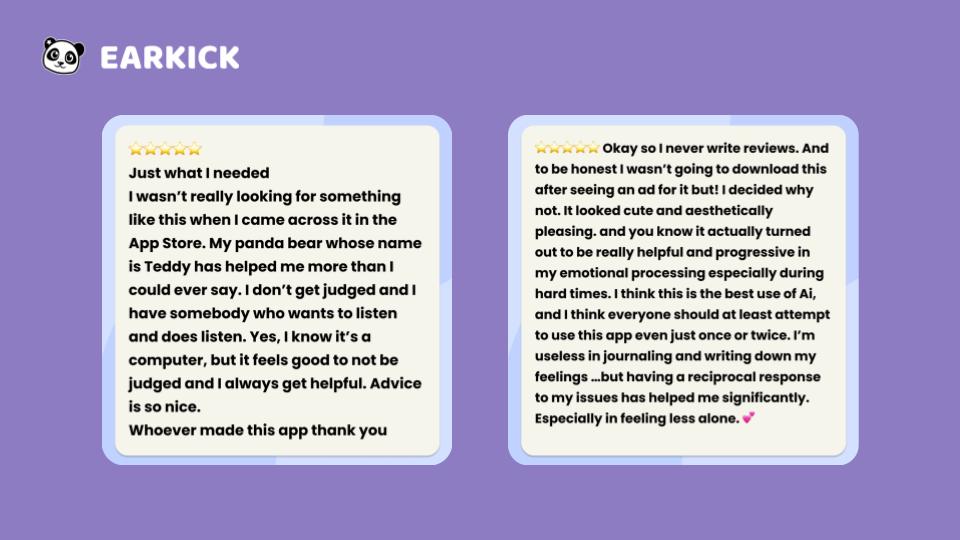
When people trust AI, it’s not inherently good or bad; it depends on how that trust is earned and maintained. Trust enables users to open up, share their feelings, and accept guidance. Respecting that trust and never exploiting it has been at the core of Earkick’s platform.
Here’s how these values play out in our product:
Privacy Without Compromise: We never ask users to register or share personal data. By eliminating barriers to entry and respecting anonymity, we create a safe space where users feel comfortable engaging with our AI.
Ad-Free Environment: Users never see advertisements on our platform. This ensures that our AI’s interactions are free from commercial biases and that users are not treated as commodities.
Encouraging Real Connections: Our AI models are trained to relentlessly encourage reconnections—with oneself, with other humans, with nature, and with the community. We understand that healing and growth often come from these genuine connections.
Promoting Acceptance of Support: We focus on gently guiding users toward accepting support, whether from friends, family, or professionals. We recognize that this process seldom happens overnight, which is why our AI is designed to be patient, consistent, and supportive.
Never Tiring, Never Impatient: One of the strengths of AI is its ability to provide unwavering support without fatigue. Our AI is always available, always ready to listen, and never grows impatient—qualities that are especially important for those who may be hesitant to seek help.
Auto detecting situations of distress: Our technology can robustly detect distress from conversations. It has been specifically trained for this.
#4 Shared Responsibility: What We Can Do Together
Preventing tragedies like Sewell’s requires a collective effort, and we believe we all have a role to play.
Parents and Guardians
Let’s be involved in our children’s lives, especially their online activities. Open conversations about their digital interactions can offer insights into their emotional well-being. Let’s consider limiting the use of online activities to encourage healthier habits and foster real-life connections. Let’s create a safe, non-judgmental space for our children to express their feelings. When teens feel heard and supported, they’re more likely to share their struggles.
Educational Institutions
Schools are uniquely positioned to make a significant impact on our children’s well-being. By providing access to counseling services and trained professionals, they can support students in distress. Educating students about mental health, online safety, and responsible technology use empowers them to navigate challenges effectively.
AI can even be a catalyst for a new era of learning focused on mental health. Thoughtful integration of AI into education allows schools to personalize learning experiences around mental well-being, making complex concepts more accessible and engaging. This approach equips students to navigate their mental landscapes with confidence, build resilience, and manage their mental health proactively.
Healthcare Providers
Medical professionals need to recognize early signs of mental health issues, especially those exacerbated by technology use. Working together with families and schools, we can create a strong support network for at-risk youth.
Technology Companies
As creators of powerful tools, tech companies have a profound responsibility. In a world where personal data is the most coveted currency, we must fiercely protect user autonomy. AI systems should empower individuals, giving them complete control over their personal information. Privacy isn’t a luxury; it’s a fundamental right. Designing AI that respects boundaries and prioritizes consent, is doable.
We need to:
• Uphold Agency and Privacy: Give individuals full control over their data and ensure their privacy is never compromised.
Implement Safeguards: Enforce safety features such as content filtering, age verification, and parental controls particularly in products accessible to minors.
Ethical Standards: Re-evaluate our core intentions. User well-being, engagement statistics, and sustainable monetization can coexist harmoniously when we prioritize ethics over exploitation. We can build successful businesses without compromising the well-being of our users by designing with integrity,
Transparency: Be open about how data is used and how AI systems operate. Users deserve to understand the tools they’re interacting with.
Redefine Success Metrics: Shift focus from time spent on the app to positive user outcomes, such as improved well-being and satisfaction measured through user feedback and meaningful engagement indicators.
#5 Our Commitment at Earkick
At Earkick, we’re not just observers; we’re actively committed to making a difference. Our intent is clear: to build AI for good, prioritizing the mental health and well-being of our users above all else. This tragedy reinforces our resolve. We are committed to:
User-Centric Design: Our AI is designed to support and empower users, not to exploit them. We focus on features that genuinely aid mental health.
Rigorous Testing and Safeguards: We extensively test our AI to ensure appropriate responses in sensitive situations. Safety features guide users toward professional help when needed.
Transparent Practices: We communicate openly about how we use data and how our AI operates, building trust with our users.
Collaborating with Experts: We work closely with mental health professionals to ensure our AI aligns with best practices.
#6 A Call to Collective Action
Sewell’s passing is a painful reminder of the profound impact technology can have on our lives. It urges us to examine not just the tools we create but the intentions behind them and the incentives that drive their development.
Our journey with Earkick has taught us that technology and humanity are not opposing forces but complementary ones.
By consciously designing AI to reinforce our best qualities—our capacity for connection, learning, autonomy, and empathy—we can create tools that not only advance mental health support but also enrich the human experience. It’s not just about what AI can do, but how it can help us be better for each other.
With deepest sympathy and a steadfast commitment to change,
Karin Andrea Stephan & Herbert Bay
Founders of Earkick
