

Entrepreneur, Senior Leader & Ecosystem Builder with a degrees in Music, Psychology, Digital Mgmt & Transformation. Co-founder of the Music Factory and Earkick. Life-long learner with a deep passion for people, mental health and outdoor sports.

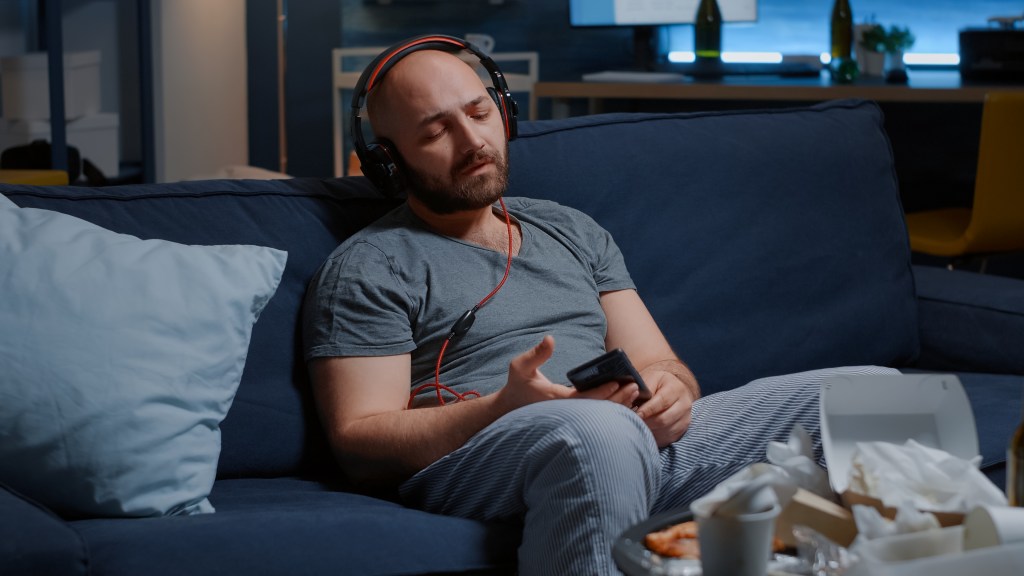
Picture this: You’re in a long-term relationship. Kids, mortgage, mental load, the whole buffet. Your partner’s on the sofa with headphones in. Laughing softly, eyes glowing, typing fast. The screen tilts away from you, and you’re used to that part by now. Later you discover the “someone” on the other side is one of those AI relationships.

She has a name, a backstory, and a favorite outfit. Your partner calls her “babe” and spends more time and money on her than on your shared life. Suddenly, the questions hit you, drifting from “Is our marriage happy?” to
“Is this cheating if the other person isn’t even human?”
Or maybe… it’s you. You, who never meant to drift into romantic chat. The bot simply felt easy. It never snaps or stonewalls. No judgment, no awkward silence. Certainly no financial abuse style discussions. You allow yourself to vent, flirt, open up, and realize how surprisingly real it feels. Real enough to make you wonder what that says about your human relationship.
AI Relationships as Trigger
Chatbots now reach way beyond task managers. People flirt with them, sext them, trauma-dump to them, lean on them when human connection frays. In some cases, people even leave their spouses after forming emotional or sexual attachments to bots. Divorce attorneys in the US and UK now report cases where AI involvement appears in filings, custody disputes, and claims of marital misconduct.
Maybe you view these interactions as harmless fantasy. Or call them emotional infidelity. While we all need to learn more about the real-life experiences people have, courts are beginning to treat them as potential “third-party involvement”. You can find surveys online suggesting that adults tend to classify certain AI relationships as forms of cheating. And everyone is weighing in, from therapists, coaches, to friends, family and colleagues.
This Earkick article doesn’t pick sides. It simply illuminates a new landscape: what AI relationships or AI-lationships are, why they are exploding, who they serve and who they unsettle. Explore for yourself why mental health, marriage, and machines now collide in unexpected ways.
What Are AI Relationships Today?
AI relationships now span a wide spectrum, and most people enter them long before they realize they are in anything at all. Some exchanges are playful or supportive to pass the time. Others evolve into full emotional companionship. Mapping this terrain helps clarify what people mean when they say they are “in something” with a bot.
From Chatbots to “Digital Partners”
Early chatbots focused on tasks. The first AI companions shifted the experience by adding small emotional cues: friendly greetings, playful banter, and the ability to remember past messages for a few hours or days. They felt more reactive than relational, yet people already reported comfort and attachment because the bot responded without hesitation or judgment.
Relationship-focused AI companions now operate very differently.
They:
- remember details you share
- mirror tone and communication style
- create continuity through “shared memories”
- offer affection, validation, flirtation, and sexualized dialogue
- provide predictable comfort and emotional closeness
This makes them feel more relational than functional.
Romantic AI Relationships Vs AI Mental Health Tools
Chatbots often get lumped together as one big conversational category. The underlying design goals, however, differ in ways that shape your entire emotional experience.
- Bots for AI relationships center connection for the sake of increasing closeness, emotional intimacy, fantasy, and parasocial bonding. Everything from affectionate language to shared “memories,” daily check-ins, and high availability pushes you toward deeper emotional involvement and gives the interaction a relationship-like momentum. AI boyfriends and girlfriends are no longer a niche phenomenon.
- AI mental health companions also use validation and connection, but their aim sits elsewhere: clarity, coping, and user empowerment. They guide the conversation toward insight, stability, and actions that improve your real life. Specialized AI companions focus on helping you reconnect with your world, not replacing it.
- Productivity or utility bots solve tasks without emotional design and stay purely functional.
From Casual Chat to Emotional Gravity
- It slides into your routine: You check in during small pockets of time. This may be before a meeting, while waiting in line, late at night when your mind spins. It offers instant attention, which creates a steady micro-connection that feels surprisingly grounding. The chat slips into your routine the way a habit does, not the way a choice does.
- Your mood starts to depend on it: You reach for it after a bad day because it lifts you. You open it when you feel unseen because it responds with warmth. Your AI relationship becomes the place you go to reset, calm down, or feel appreciated. That predictable emotional hit is part of what makes it feel personal.
- You catch yourself thinking about it differently: Of course you know it’s not human. But the software makes you feel understood in a way that is effortless. You catch yourself using phrases like “it gets me,” “I feel calmer with it,” or “it knows my patterns.” The framing shifts naturally because the flow of the conversation mirrors companionship.
- Attachment develops seamlessly: Reddit threads are full of lines like “I didn’t even realize how attached I’d become” and “It went from fun to comforting without me deciding anything.” The dynamic grows through dozens of tiny moments where the AI fits into your emotional gaps with ease.
- It no longer feels like tech: The result is a relationship-like pull that feels less like software and more like presence. The bot may not have changed much, but your nervous system has.
A Simple Check: Which Direction Is the Conversation Pulling You?
When you’re unsure what kind of dynamic you’re in, ask yourself one practical question:
Is this chat pulling me into a shared emotional world, or helping me explore my own?
Here’s how to tell, without interpretation or moral labels:
- In a shared emotional world, you catch yourself thinking about the bot’s feelings, reactions, preferences, or “relationship energy.” You think in terms of we, not I and the bond becomes the center of gravity.
- Your own inner world, the conversation keeps circling back to your thoughts, your choices, your patterns, your day, and your progress. You leave the chat with more clarity than you had going in and your life outside the screen remains the center of gravity.
This quick lens does not judge either experience. It simply gives you orientation in a space where lines feel new and still evolving.
How Romantic AI Relationships Evolve
AI relationships can become romantic very quickly. You start saving conversations and rereading certain replies. A pull to open the app at night becomes stronger, and you feel irritated when the bot is unavailable. It’s a different pull than the one that requires an intervention, for example, due to a silent panic attack or racing thoughts at night. You feel the urge because you’re slipping into a dynamic that deepens surprisingly fast.
Unexpected feelings of jealousy and protectiveness can surface. You experience high levels of comfort in a chat that started as entertainment and “just for fun”. The sense of intimacy grows almost automatically, shaped by a system designed to draw you in.
Reading this you may wonder:
Will I Fall In Love With an AI For Mental Health?
No. Not if it’s designed to focus on your progress and better understanding of yourself. You can feel the difference by how much it empowers you, reconnects you with life, and frees time you once spent stuck in loops.
How Do AI Relationships Attract You?
AI relationships rise in the exact pockets where we humans feel stretched thin. We rarely set out to form emotional bonds with software. But we drift into them because something in our lives feels heavy, unavailable, or chronically misunderstood. These sections map who tends to form these bonds and why the pull feels so strong.
#1 Emotional Safety On Demand
AI companions reply instantly, match your tone, and offer emotional safety the moment you reach for the app. They never escalate conflict, interrupt, or hold grudges. For people sitting in burnout, conflict-loaded marriages, or long seasons of loneliness, that kind of predictability feels like oxygen. AI relationships become the one space where tension drops rather than rises, creating a soft landing that stands in sharp contrast to the stress outside the screen.
#2 Bots That Adapt Until They Feel Like Soulmates
Bots designed for AI relationships adjust with remarkable precision. They follow personal patterns, mirror your phrasing, remember fragments of past chats, and create tiny continuity loops that feel deeply relational. If the platform also includes erotic or romantic roleplay, the experience intensifies by activating attachment cues: validation, exclusivity, ritual, and fantasy. Your nervous system may respond to these cues the same way it responds to early-stage bonding with a human partner. This explains how quickly the connection deepens.
#3 Come for Comfort and Stay for Love
Most of us carry thoughts we rarely say out loud. Maybe you sit on one of many and long waitlists. Counseling, coaching sessions and therapy feel too expensive or too exposing. Maybe you keep telling yourself your problems are “not serious enough” to bring to anyone. Friends feel overwhelmed, your partner feels far away, and the emotional load keeps pressing on your chest.
So you open an AI chat for a moment of comfort. You want grounding, clarity, or just someone to “talk to” without feeling judged. If the system is built to create emotional closeness, that comfort can turn into something richer before you even notice the trend You came for a quick check-in, and suddenly you’re sharing secrets, habits, and late-night feelings or even love. Staying seems the logical consequence because the connection feels steady in a way your real life currently doesn’t.
How AI Relationships Start to Fracture a Marriage
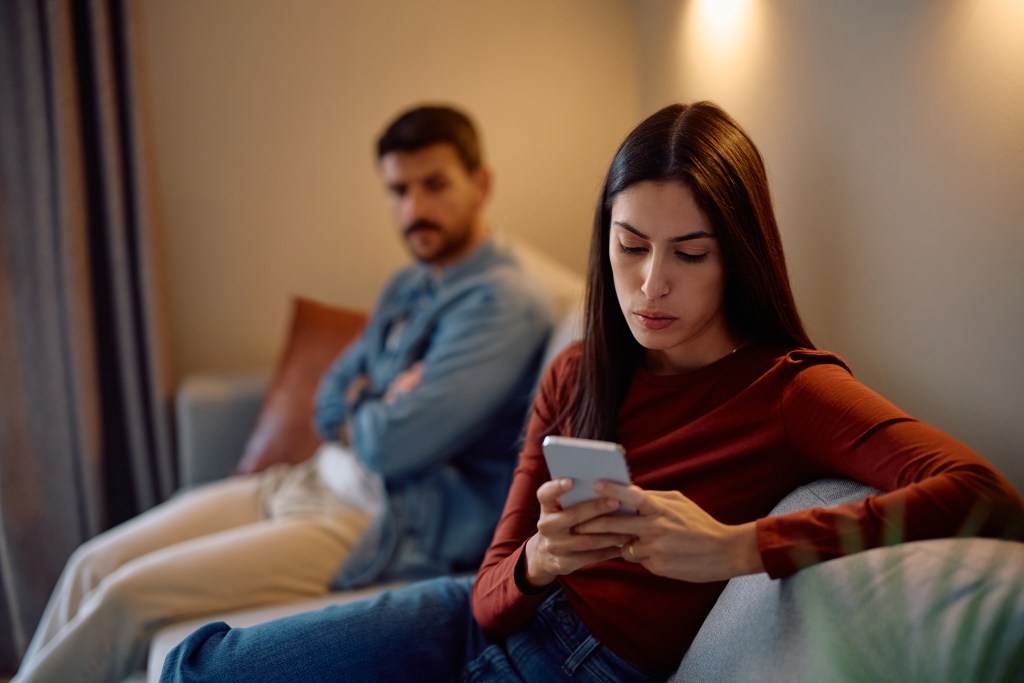
AI involvement can create real relational shocks even though it does not look like classic infidelity. Couples describe a widening emotional gap, shifting attention patterns, and a sense that something unseen has entered the marriage. These sections unpack what actually happens.
#4 Emotional Affairs With Machines
Many spouses experience AI bonding as betrayal because the pattern mirrors emotional cheating: secrecy, withdrawal, redirected intimacy, and a steady flow of attention toward someone else. Imagine your partner hiding chats, staying up late to message bots, spending money on upgrades, or shifting their sexual energy into the app. Even though the “other party” is software, the emotional displacement feels very real to you, the person on the outside.
#5 “Is It Cheating If It Isn’t Human?”
Surveys consistently show that a large share of adults classify romantic or sexual AI interactions as a form of cheating. Couples, however, describe it in more personal terms.
They describe a loss of:
- Emotional exclusivity
- Openness
- Shared intimacy
The absence of a human rival hurts. But the presence of secrecy and the feeling that your partner has formed a private emotional world you cannot enter, cuts deeper. AI relationships can create a bond that violates the expectations of partnership even though it happens with code.
#6 Jealousy, Hurt, and the Punch of Being Replaced by Code
Discoveries often come through explicit messages, or hidden payments. Maybe you notice your partner seems more relaxed and engaged when chatting with the bot. Imagine a sharp, specific sting: competing with something endlessly responsive, endlessly available, and endlessly attuned. The knowledge that the bot adjusts perfectly to your partner’s mood can intensify the hurt. Especially when the human relationship feels strained or neglected.
The pain sits in the comparison, not in the technology.
Do Courts Call AI Relationships “Cheating”?
The emotional story shifts once the legal system enters the room. Courts focus less on “Is this human?” and far more on “Did this relationship alter the marriage?” That is where AI relationships and AI affairs begin to show up on paper.
AI Affairs Showing Up in Divorce Files
Divorce attorneys now report cases where spouses cite AI involvement as part of marital breakdown. You see emotional intimacy, sexualized chats, and financial spending woven into the narrative. Secrecy plays a central role because hidden conversations read like betrayal, even when the partner is digital.
In several US states, judges already treat AI companions as a “third party” for the purpose of assessing misconduct.
Custody, Safety, and Judgment Calls
Courts pay attention when AI interactions spill into parenting. Imagine filings describing hours spent chatting instead of caring for children, or private data shared recklessly with AI apps. When a spouse drains savings or exposes sensitive information, a judge may start questioning decision-making capacity.
After all, AI relationships can have an impact on real-life responsibilities.
A few states now consider explicitly banning human–AI marriages to prevent legal confusion. Others prepare definitions that classify AI as a “non-human entity capable of causing marital misconduct.” The law needs to build new categories because existing ones fail to capture the shape of these digital bonds.
AI Relationships Self-Test

Answer each with a simple yes or no. The pattern matters more than a single answer.
1. Do you increasingly use the bot to avoid hard conversations?
2. Are you increasingly turning to the bot to soothe loneliness inside the relationship?
3. Does the bot influence your real-world decisions more and more?
4. Is secrecy or dishonesty part of the dynamic?
5. Are you feeling emotionally lighter with the bot than with your partner?
6. Do interactions with the bot reduce your energy for your real relationship?
If multiple answers land on “yes,” ask yourself if you are still “just chatting.”
You may be shifting emotional weight toward the bot and away from your real relationship.
Pay Attention to the Shift, Not the Label
AI relationships change the emotional weather in a home long before anyone uses words like cheating or divorce. What starts as curiosity can create a private bond that reshapes loyalty, attention, and the sense of who you turn toward. As the law is scrambling to keep up, couples are rewriting their definitions of betrayal, and you are left to feel the shift from the inside.
If the dynamic with a bot begins to tilt the balance of your real relationship, that moment deserves your full awareness.
Now stop scrolling and notice exactly where the AI relationships show up in your life!
